Commercial Storm Damage in Clarks Hill, IN
When a curtain wall or rooftop unit curb lets storm water in, Clarks Hill Water Restoration dries what it leaves behind in Clarks Hill.
Need Commercial Storm Damage in Clarks Hill? Clarks Hill Water Restoration answers 24/7 with certified crews, fast on-site response, and documentation built for your insurance claim. Call (463) 241-6041 now.
- Service: Commercial Storm Damage for Clarks Hill homeowners
- Service area: Clarks Hill, IN and surrounding areas
- Response time: 24/7 live dispatch; emergency crews prioritized for Clarks Hill
- Licensed and insured (License #RC21100059)
- Serving Clarks Hill, IN since 2018
Commercial Storm Damage Cleanup in Clarks Hill
We'll secure and dry commercial buildings in Clarks Hill after a storm opens the roof or floods a lower level.
Storms Here
Damaging wind can hit here, and that puts roofs and rooftop equipment at risk. NWS Indianapolis posts summaries of past storms, which helps when your carrier asks for a date.
We respond to storm calls from businesses anywhere in Clarks Hill, including those around the Main Street commercial district. We also handle commercial storm damage in Dayton, Colfax, Stockwell and Lafayette.
Commercial Storm Damage for Clarks Hill Businesses
Wind driven rain can find its way in without any opening in the roof. It works through failed sealant joints in a curtain wall or around window gaskets, then shows up as a wet floor a couple of bays in from the glass. Clarks Hill Water Restoration traces commercial intrusion in Clarks Hill back to the actual entry point with thermal imaging and moisture meters, then dries the cavity the water filled on its way in.
Crews work commercial storm calls across central Indiana, and Clarks Hill Water Restoration takes them 24 hours a day. A crew dispatches to Clarks Hill within two hours, closes the breach with a temporary dry in and starts extraction under it. During a widespread storm, buildings still taking on water go first, so say on the call whether water is still coming in.
Every job at your Clarks Hill property opens with a walk alongside the property manager. The crew marks the wet areas on a floor plan and agrees on a staging spot and a debris route that stays away from tenant entrances. Nothing gets staged until the walk is finished and the plan is agreed, and shutoff and panel locations are written on the plan before the first machine runs.
Some commercial storm losses get paid out of an operating budget, and the documentation still matters there. Clarks Hill Water Restoration builds the same file either way on a commercial job in Clarks Hill, because a capital request to ownership gets reviewed too. Readings, photos and a scope tied to measured area give the property manager something defensible to hand up.
Ownership is going to ask what this costs and how long the space is down. Call Clarks Hill Water Restoration and a crew dispatches to your Clarks Hill property, measures what's wet and gives you a drying timeline to work from. The team takes calls across central Indiana at any hour.
Signs You Need Commercial Storm Damage Restoration
If you notice any of these in your Clarks Hill building, schedule a free inspection before the issue worsens.
Insulation batts above the ceiling grid that are compressed, matted, or dripping at the edges
Rust streaks or white efflorescence running down an interior wall below a parapet line
A tenant reporting the same leak every heavy rain, in the same corner of the same suite
Roof drain piping dripping at a joint inside a chase or above the ceiling
Rust on the metal stud track at the bottom of a wall cavity once an opening is cut
Leak sensors or pit alarms going off in a mechanical room or IT closet during a storm
Raised access floor panels that feel damp, with water showing beneath them in a telecom room
Breakers tripping in a mechanical room or electrical room that sits under a roof penetration
Daylight visible through a roof penetration curb or around the flashing at a rooftop unit
A roof drain or scupper running slow, gurgling, or ringed with debris and sediment
How Clarks Hill Water Restoration Handles Commercial Storm Damage
We follow these steps in order on every Clarks Hill job.
Power and Safety Walk
Before extraction starts, the crew walks the wet areas with your building engineer and confirms which circuits serve them. Cords run through ground fault protection, and the electrician decides what can be reenergized.
Moisture Mapping
Every affected space gets walked with thermal imaging and both penetrating and nonpenetrating meters. Readings are keyed to a floor plan by room or column line, so the scope covers where the water went and leaves dry areas alone.
Extraction and Debris Removal
Standing water comes off floors with portable and truck mounted units. Saturated lay in tile and wet batt insulation get bagged and hauled out. Water held in the plenum is released through controlled openings so it stops dripping onto tenant equipment.
Occupied Space Planning
Suites and corridors that must stay in service get marked on the plan before any equipment is staged, along with where the barriers go. The loud work is scheduled for hours when the space is empty.
Equipment Out and Space Release
As each area reaches its dry goal, the equipment comes out of it and the space goes back to the tenant. The release date and final readings for every area go in the file.
Commercial Storm Damage in Clarks Hill
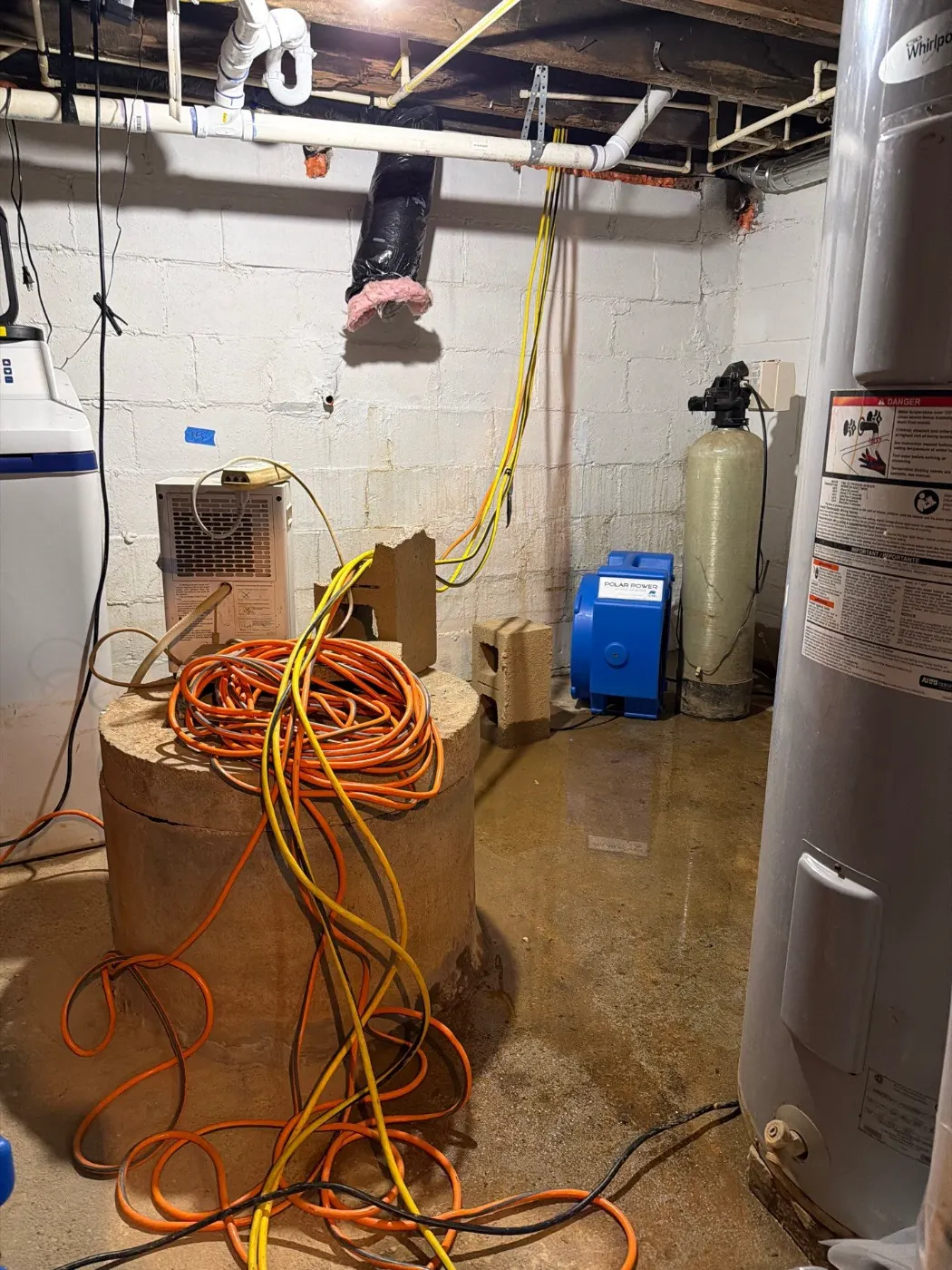
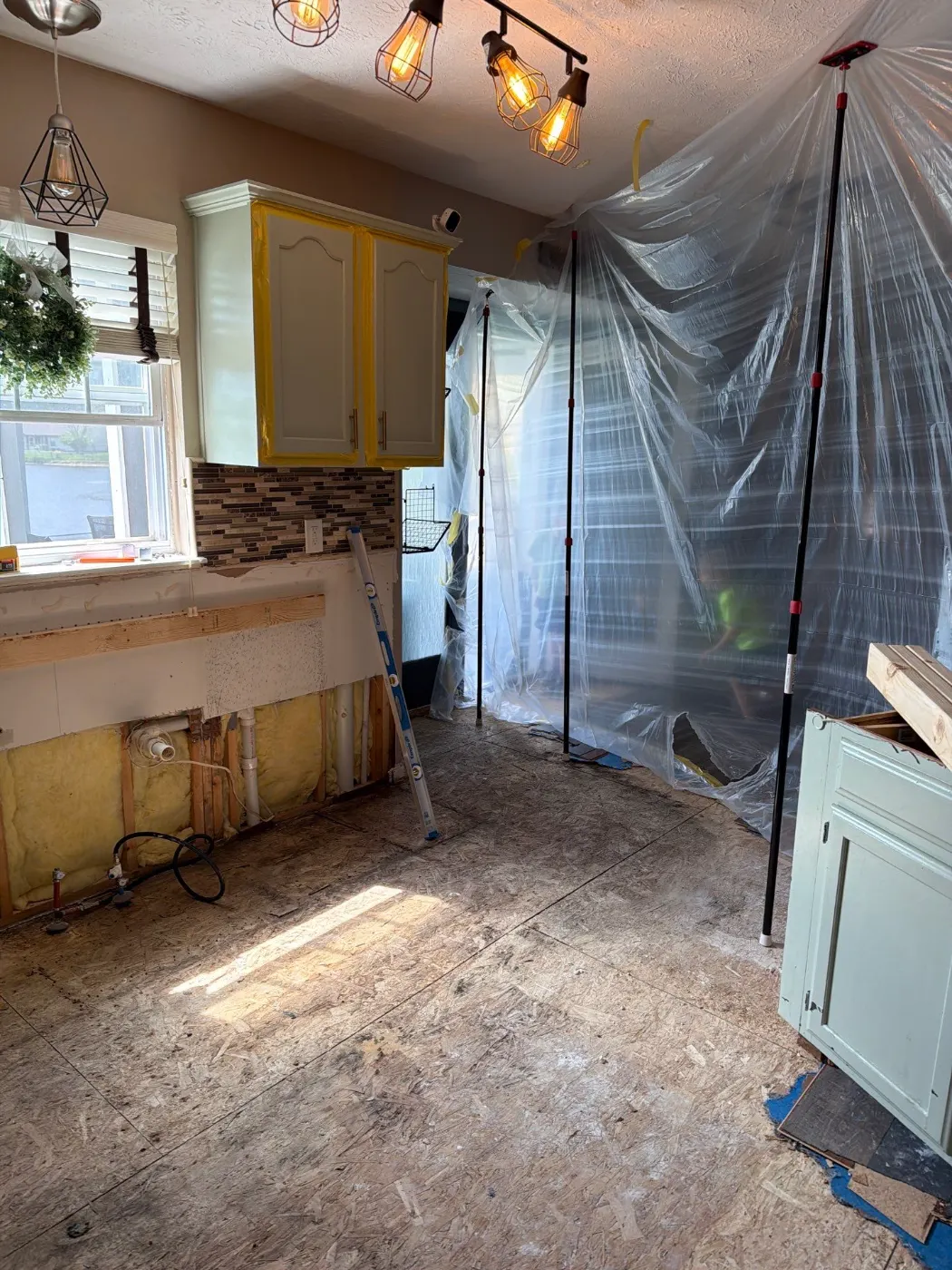
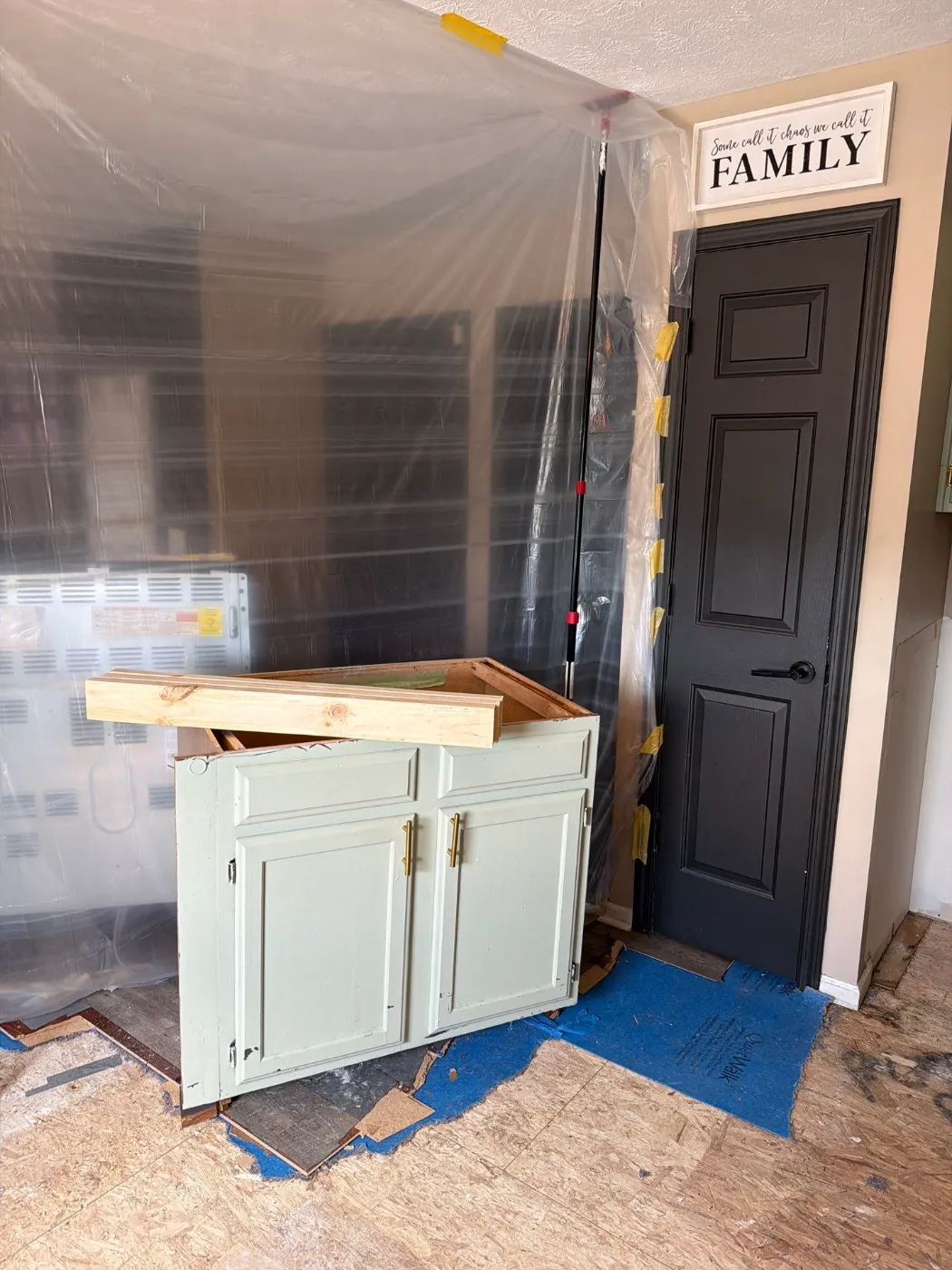
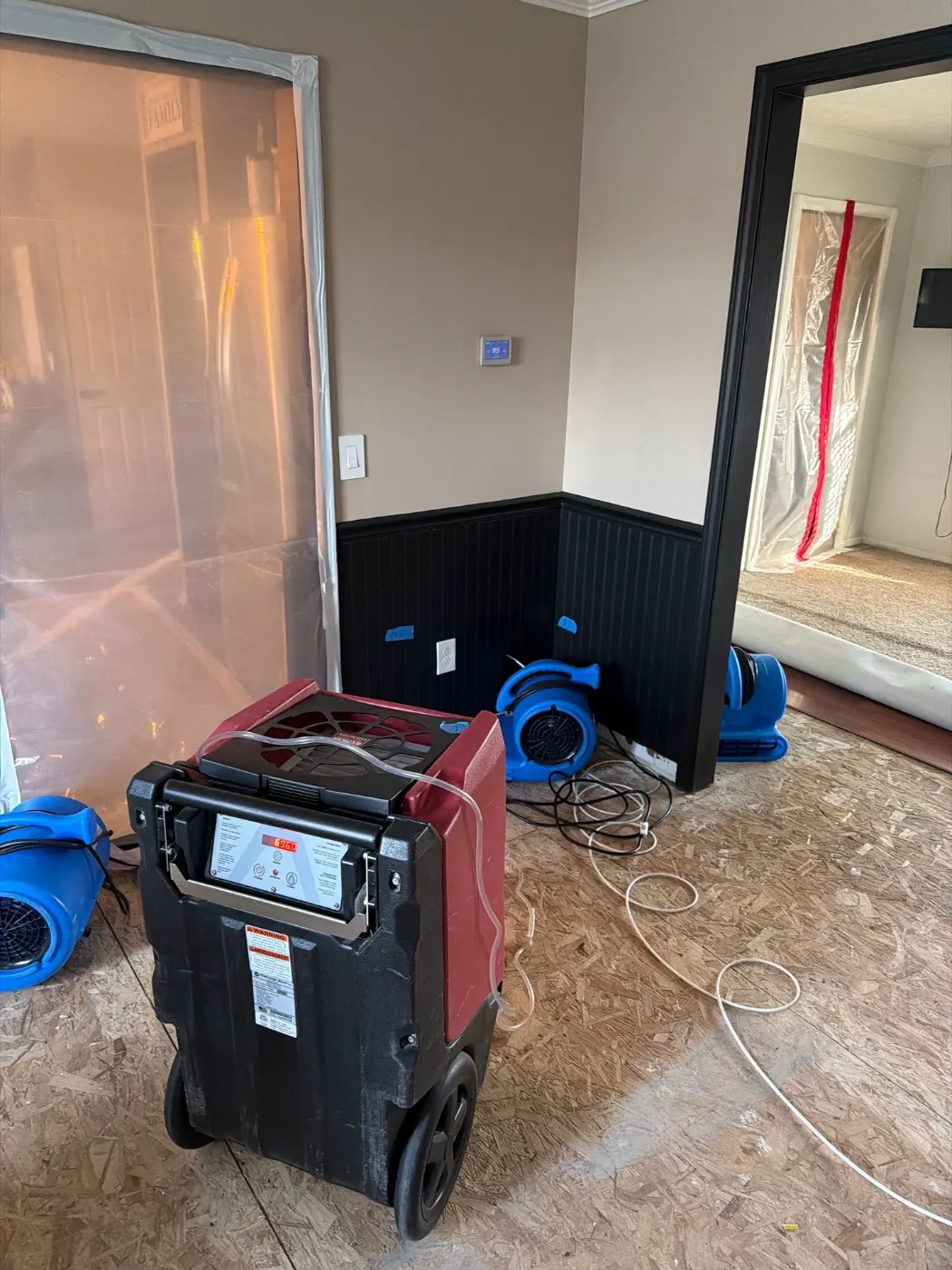
Photographs from real commercial storm damage jobs completed by our crew in Clarks Hill and surrounding areas.
Commercial Storm Damage FAQ
Questions Clarks Hill property managers ask us about commercial storm damage restoration.
Guidance and Standards for Commercial Storm Damage
- The National Weather Service office in Indianapolis posts summaries of recent central Indiana storm and flood events. NWS Indianapolis Event Summaries
- The ANSI/IICRC S500 is the published standard for professional water damage restoration. The current edition is the Fifth Edition, 2021. IICRC S500 Standard
Clarks Hill Neighborhoods We Serve
We take commercial storm damage calls in every part of Clarks Hill. Pick your neighborhood for local details.
Other Restoration Services in Clarks Hill
Clarks Hill Water Restoration handles the full scope of restoration work. Explore our other services below.
Water Damage Restoration in Clarks Hill
24/7 emergency response. IICRC certified water restoration from extraction to full dry out.
Learn more →Basement Flooding in Clarks Hill
Basement water emergencies handled fast. Extraction, drying, mold prevention.
Learn more →Sewage Cleanup in Clarks Hill
Category 3 biohazard cleanup. Full containment, decontamination, structural restoration.
Learn more →Request Commercial Storm Damage Restoration
Reach Us Directly
Our team is available 24/7 for emergencies and ready to schedule inspections during business hours.
Need Immediate Help?
For active water or mold emergencies, call us directly. We are available 24/7.